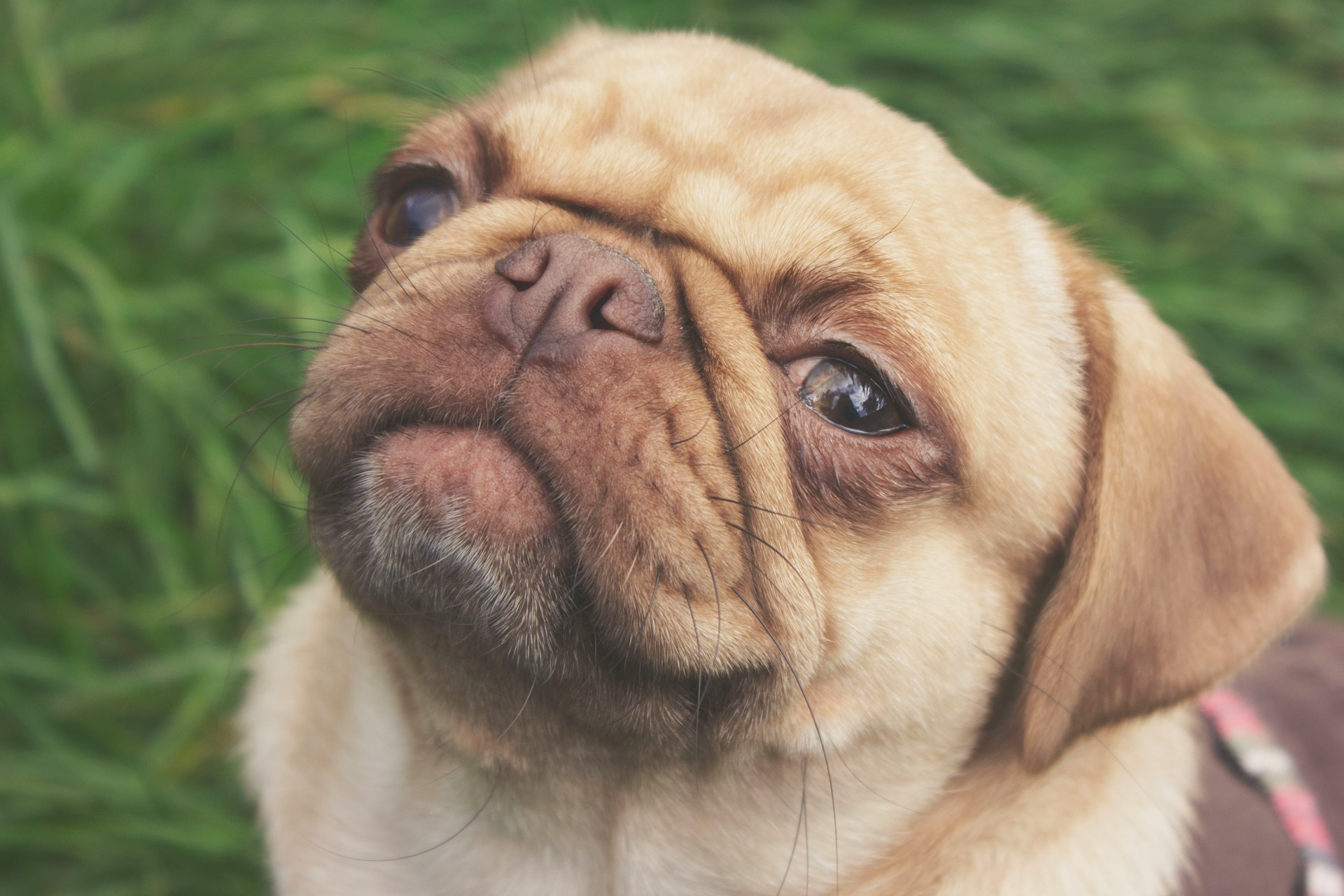
Your pug snores like a tiny freight train, and honestly, you wouldn’t change a thing. You love their snorts and funny wheezes, and their sweet little squished-up face.
However, flat-faced dog breeds tend to have more dental problems than other dogs. Because they have to fit a full set of teeth into a much shorter jaw, issues like crowding, underbites, and tooth loss are very common.
Brachycephalic Dogs and Underbites, Crowding, and Tooth Loss
“Brachycephalic” is the scientific term for flat-faced breeds.
Here’s who falls into that club:
- Pugs
- French Bulldogs
- English Bulldogs
- Boston Terriers
- Boxers
- Shih Tzus
- Pekingese
- Lhasa Apsos
- Brussels Griffons
- Japanese Chins
- Cavalier King Charles Spaniels
- Bullmastiffs
- English Mastiffs
- Dogue de Bordeaux
Mixes can inherit the same squished face and the same dental quirks, so if your dog looks like they belong on this list, they could have the same dental problems.
The Most Common Dental Problems in Flat-Faced Dogs
1: Underbites
When the lower jaw sticks out past the upper one, it causes an underbite. For many breeds, that bite is actually considered normal. But when the top and bottom teeth strike each other or poke into the gums, that’s called a traumatic bite, and it can cause significant pain.
2: Crowding
Flat-faced breeds have a shorter jaw than other dogs, but they still have the same 42 teeth to fit into it. Food gets stuck in the tight gaps, and that’s what leads to tartar buildup and gum disease. Teeth also twist and tilt to make room, and the upper third premolar is the one that rotates most often. Every twisted tooth is one more place for plaque to hide.
3: Tooth Loss
Picture a row of teeth shoved together like commuters on a train. Some can’t erupt properly, others get stuck beneath the gums, and plaque loves every crevice.
All of that tends to end in the same place. Plaque turns to tartar, the gums get inflamed, and eventually the tissue holding a tooth in place breaks down. Finally, your dog’s tooth gets loose or has to come out. Pet tooth extractions are common for crowded teeth and misaligned bites alike.
Is It Safe for Flat-Faced Dogs to Go Under Anesthesia?
Many of these problems can be eased with selective tooth extractions early in life. Sadly, many dogs never get that chance and live with chronic pain and infection. That’s because their owners are worried about putting their pet under anesthesia.
Flat-faced dogs have narrow airways, which raises the risk of complications. However, as long as you have an experienced and certified veterinary team, there shouldn’t be any problems.
Here at Texas Veterinary Dental Center, we always start with a pre-anesthetic screening. We’ll take a look at your dog’s health history and give them a physical exam. If they’re healthy enough for anesthesia, we’ll design a plan specific to their physiology.
While they’re under anesthesia, we’ll be watching their heart rate, breathing, blood pressure, temperature, EKG, and blood oxygen levels the whole time. Your pet will receive pain medication before and often after surgery, as well as a local nerve block that numbs the extraction site.
We’ll continue monitoring your pet’s vitals during recovery, and call you to pick them up once they’re awake and walking.
Schedule a Pet Dental Visit in Stafford
Flat-faced dogs often end up needing dental care. If your snub-nosed pup has yellow teeth, bad breath, trouble chewing, or any other signs of dental pain, contact Texas Veterinary Dental Center in Stafford to make an appointment.
We’ll look at their bite, take x-rays, and explain every option before you decide on treatment. We’re open Monday through Thursday, from 7 AM to 5 PM. Give us a call to schedule an exam for your dog today!
Photo by Rebecca Campbell on Unsplash with permission under the Creative Commons license for commercial use 10/11/26.