Almost every week, someone walks into our Stafford office holding a bag of dental chews from the pet store, asking the same thing. Does this stuff actually work, or am I just buying an expensive snack?
It’s a fair question. The dental treat aisle keeps getting longer. And not every product on that shelf lives up to what the bag promises. So, do dental chews really work? The honest answer is that some do a lot, some do a little, and a few barely do anything besides add calories to your pet’s diet.
But as long as you choose the right treats, it’s one of the easiest ways to improve your pet’s dental health.
What Makes a Dental Chew Actually Work
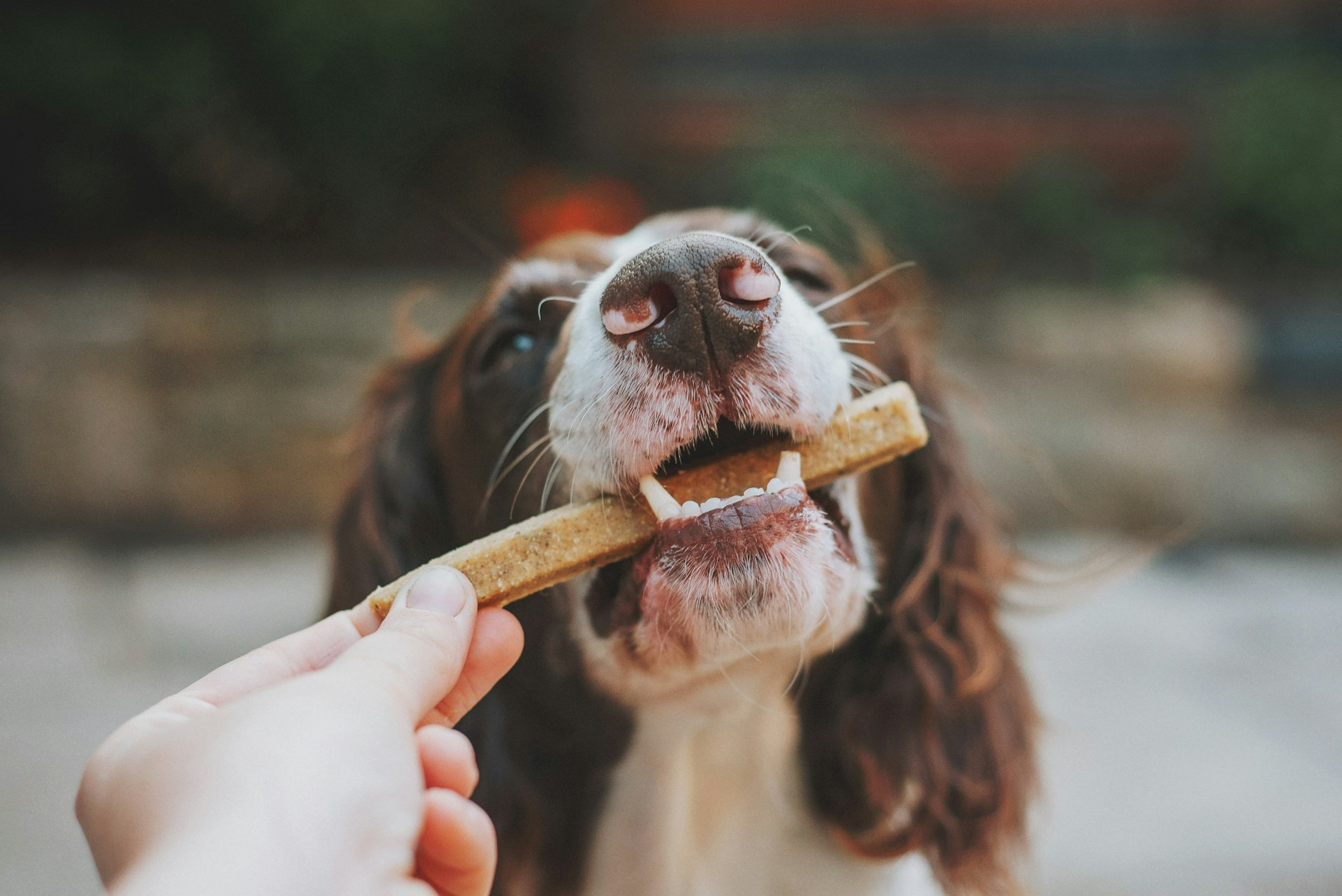
The idea behind a good dental treat is pretty simple. As your pet gnaws on it, the texture scrapes plaque off the tooth surface before it has a chance to harden into tartar. That’s really the whole mechanism.
Treats that are too small or soft will get swallowed in two bites. They won’t make enough contact with your pet’s teeth to make a difference. A chew needs to have some resistance and give your pet a decent amount of gnawing time. The longer they chew, the more likely they are to use their back teeth, where plaque tends to build up fastest.
The shape of the treat is important, too. Chews with ridges or raised nubs tend to reach more of the tooth surface than a flat stick. Picking the right size for your pet’s mouth keeps them chewing longer instead of trying to swallow it in two bites.
Picking the Right Chew for Your Pet
Hardness, size, and shape all matter more than most pet owners realize. Picking the wrong one can do more harm than good. Selecting appropriate dental chews means knowing what to look for and what to avoid.
There isn’t one single best dental treat for every pet. Size, chewing habits, and any existing dental issues all factor in. A big, aggressive chewer needs something firmer than a small senior cat with a few missing teeth.
Take a Border Collie versus a Pekingese. A Border Collie will go through a flimsy dental chew in about ninety seconds flat. Their jaws are strong, they’re motivated, and a softer treat just doesn’t do much for the teeth before it’s gone. These dogs usually do better with a denser, longer-lasting chew that can stand up to some real pressure. A Pekingese, on the other hand, has a much smaller mouth and a flatter jaw structure. Therefore, that same tough chew could be a choking hazard or just plain uncomfortable to gnaw on. Smaller, softer options sized for their mouth work a lot better here.
Then there’s the age factor. An older dog who’s already lost a few teeth, or who has some gum sensitivity going on, isn’t going to want to work through something rock hard. Their mouths are more delicate at that point. Thus, a softer chew, or even a dental treat designed to dissolve or break apart more easily, tends to be a better fit. Pushing a senior dog toward the same tough chew a younger, healthier dog handles just fine can actually do more harm than good. It can even lead to cracked teeth or sore gums.
So really, matching the treat to the pet, not just grabbing whatever’s on the shelf, makes a real difference in whether it actually helps their dental health or just becomes a snack they inhale in two bites.
Top 3 Dental Chews for Dogs
- Greenies Dental Chews – Proven to reduce both plaque and tartar, these treats come in a variety of sizes and life-stage formulas.
- Purina DentaLife Daily Oral Care Dog Treats – A porous-texture design helps clean teeth. Some formulas help reduce tartar, while others help get rid of plaque.
- ProDen PlaqueOff Soft Chews – This chews uses a unique blend of seaweed-based ingredients to support oral health and cleaner teeth.
Top 3 Dental Treats for Cats
- Greenies Dental Treats – The crunchy texture reduces tartar buildup and the treats come in a variety of flavors that cats enjoy.
- Purina DentaLife Daily Oral Care Cat Treats – The porous texture of these treats surrounds the entire tooth as your cat chews, and helps keep more of the tooth surface clean.
- Purina Pro Plan Veterinary Diet Dental Bites – Gets rid of both plaque and tartar with its unique shape and texture.
VOHC Approved Dental Chews: What That Seal Means
The VOHC’s accepted product list is a solid place to start. It’s sorted by species and product type so you can narrow things down to what actually fits your pet. It also proves that the treats you choose will be effective.
To earn the Veterinary Oral Health Council seal, a product has to prove itself in controlled trials, showing at least a 20% drop in plaque and tartar. Looking for the VOHC seal can help you rule out a lot of products that make promising claims on their packaging but don’t hold up under testing. If you see the VOHC seal, that particular brand of dental chew genuinely works.
Pet Dental Care in Stafford and the SW Houston Area
Even the best chew is a supplement, not a substitute, for professional dental care. Chews clean the parts of the tooth they touch. However, they can’t reach below the gumline, where periodontal disease actually gets started.
If it’s been a while since your dog or cat had their teeth cleaned, bring them to Texas Veterinary Dental Center. Our board-certified veterinarians will conduct a thorough exam, and while you’re here, we can also tell you which dental chews are safe to give your pet and which ones to skip.
Contact us to make an appointment, and we’ll get your pet on the schedule.
Photo by James Lacy on Unsplash with permission under the Creative Commons license for commercial use 7/1/26.