An Australian shepherd mix named Bucky came into our Stafford office last month because his owner noticed him tilting his head oddly while chewing. Turns out he had a fractured tooth that was making chewing painful. His owner had no idea Bucky could hide that kind of pain so well, especially as he always had a wagging tail and a normal appetite.
And that’s the tricky thing—dogs are good at hiding pain, so dental problems often go unnoticed until they’re pretty far advanced. Broken teeth, gum disease, tooth loss, and malocclusions are all common problems in dogs. Here are the five issues we see most often, and what we do to treat or prevent them.
1: Periodontal Disease
This is the most frequent dental issue we treat, because it’s caused by tartar buildup along the gumline. Tartar triggers inflammation, which leads to infections. The inflammation makes it difficult for the gums to heal, and so the infection becomes chronic.
Next, the infection spreads beneath the gums and starts breaking down the bone and ligament that hold each tooth in place. By the time a dog reaches the most advanced stage, teeth can become loose, painful, and eventually fall out on their own.
Treating Advanced Gum Disease
Gum disease moves through four distinct stages, starting with gingivitis and ending with tooth loss. Gum disease can be reversed with a dental cleaning, but only in its earliest stages. Once gingivitis turns into periodontal disease, your dog will need regular treatments.
Periodontal therapy is one of the best ways to prevent tooth loss. Treatment starts with getting rid of the infection. We clean out infected tissue and smooth out the damaged tooth surfaces. Sometimes we place medication directly into deep gum pockets to help the tissue heal and reattach to the tooth.
2: Chronic Bad Breath
Owners tend to laugh off stinky breath as a normal dog thing, but chronic bad breath is almost always a symptom, not a personality quirk. Tartar buildup is actually a colony of bacteria that release stinky sulfur compounds.
Most of the time, bad breath means that gum disease and tooth decay are already present. If your dog’s breath suddenly gets worse, a dental exam is worthwhile. And a cleaning to remove tartar buildup will help prevent future dental problems as well as bad breath.
Your Dog’s Teeth Need Daily Attention
Brushing your dog’s teeth at home will help slow tartar buildup, and so will daily dental chews. Always check the Veterinary Oral Health Council’s list of accepted dental products for pets. Every product on their list has been independently tested and proven to reduce plaque and tartar buildup.
3: Fractured or Broken Teeth
Dogs love to chew, and gnawing is one of the ways they clean their teeth. But chewing on anything too hard (like antlers, bones, or sticks) can crack a tooth in an instant. Once the outer enamel breaks away, the softer dentin underneath gets exposed, which is usually sensitive and sometimes painful for them to bite down on. If the fracture runs deep enough to expose the nerve inside the tooth, the tooth can get infected and die.
We may be able to save a broken tooth with a root canal procedure and possibly placing a metal crown. However, sometimes a tooth is severely infected or too damaged to repair and it will have to be extracted. But don’t worry—a tooth extraction might sound awful, but your dog will be glad to have that painful tooth gone for good.
How to Choose Safe Chew Toys
Plenty of the fractured teeth we treat could have been avoided with safer chew toys. Look for chews that have a little give rather than anything rock-hard. Rubber toys, softer nylon chews, and treats made specifically for dogs are usually better choices. If you can’t make a small mark in the chew with your fingernail, it’s probably too hard for your dog’s teeth. And always keep an eye on your dog while they’re chewing.
4: Missing Teeth
Sometimes teeth fall out because of severe decay, and sometimes a missing tooth isn’t actually missing at all. The root and part of the crown might be trapped underneath the gums. When a tooth breaks badly, the gum tissue might grow over the area to protect it. At other times, a tooth might be “missing” because it never developed in the first place.
Since there are several different reasons a dog might be missing a tooth, we typically use x-rays to see exactly what is going on.
How Will Missing Teeth Affect My Dog?
One or two missing teeth shouldn’t affect your dog much at all. If they have a significant number of missing teeth, a change in diet might be necessary. Soft, canned food will be much easier for them to eat than hard kibble.
5: Malocclusions
An overbite, underbite, or crowded jaw can make a dog’s teeth dig into the roof of their mouth or into the gum tissue on the opposite jaw every time they bite down.
Some misalignments simply come down to genetics, like the natural underbite seen in Bulldogs and Boxers, and don’t need any correction at all. Others cause real, ongoing discomfort and can even wear down or damage neighboring teeth over time.
Treatment for Misalignments
The goal is always to achieve a better bite so they can eat, drink, and play without discomfort. We can use tooth extractions to relieve crowding and remove the offended tooth, or sometimes reduce the height of the crown. There are even treatments similar to braces that can shift a dog’s teeth into a more comfortable position.
Veterinary Dentist for Dogs in the SW Houston Area
Dental disease isn’t rare or unusual in dogs. Most dogs already show some degree of periodontal disease by age two. That statistic is exactly why we recommend an annual dental exam and cleaning as a normal part of a dog’s routine veterinary care.
Don’t wait for obvious symptoms before you bring your dog in for an exam! A simple dental cleaning goes a long way toward preventing painful infections and tooth loss. Contact Texas Veterinary Dental Center to schedule a checkup and cleaning today.
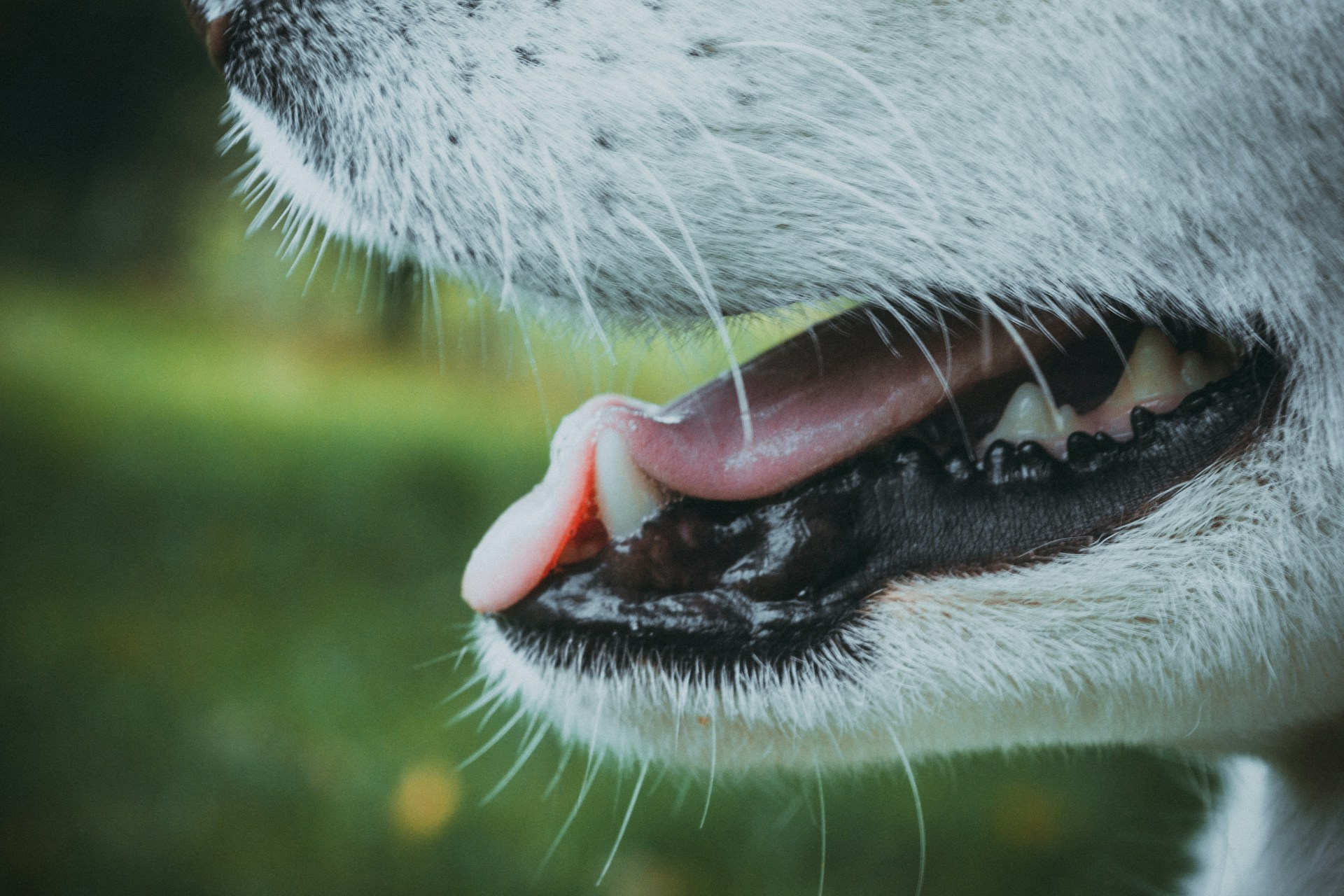
Photo by Andriyko Podilnyk on Unsplash with permission under the Creative Commons license for commercial use 7/27/26.